# How to Send CSAT to Customer and Save Data in Google Sheets or CRMs
With a Workflow, you can automatically send customers a CSAT survey when any conversation is closed. Then, you can save the data to keep track of positive and negative customer feedback and monitor satisfaction levels over time.
### Benefits of Sending CSAT and Saving Data
Use CSAT surveys to:
* Understand customer satisfaction levels and identify areas for improvement
* Track data to gain insights into customer preferences, needs, and expectations
* Identify dissatisfied customers and provide an opportunity to address their concerns, potentially turning them into loyal customers
### Method for Sending CSAT and Saving Data
* Send CSAT survey and save data using Workflow Templates
**Send CSAT survey and save data using Workflow Templates**
**Method Objectives**
* Set up your Google Sheet, CRM or data warehouse to receive survey data.
* Select a Workflow Template and customize Ask a Question steps if needed.
* Manage positive response and save data in Google sheet or data warehouse.
* Manage negative response and save data in Google sheet or data warehouse.
* Manage invalid and no responses.
### **Set up your Google Sheet, CRM or data warehouse to receive survey data**
To get started, there are a few steps to take before creating your Workflow.
Depending on where you want to save your CSAT responses, here’s how you can prepare the external platform.
Set up your Google Sheet
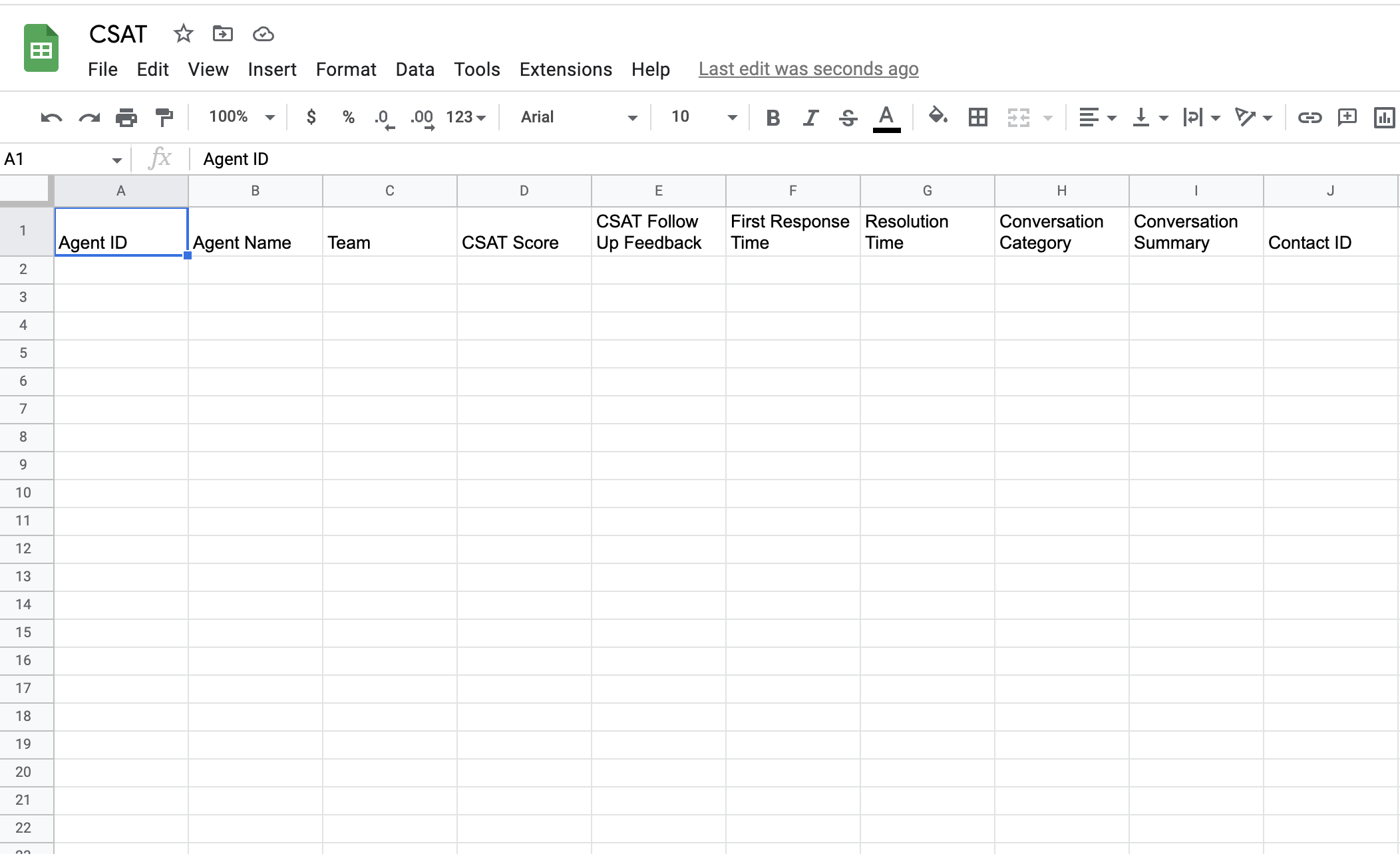
Create a Google Sheet with the following headings: Agent ID, Agent Name, Team, CSAT Score, CSAT Follow Up Feedback, First Response Time, Resolution Time, Conversation Category, Conversation Summary, Contact ID.\
You may edit the headings as desired to meet your business needs, but note that if you change them, you will also need to edit the column mapping in the [Save to Google Sheet step in the Workflow](/ismessenger/support-use-cases.md).\
Set up your CRM or data warehouse
All CRMs and data warehouses will be set up differently, but here are some things you should prepare:\
\- Find out which API keys you need.\
\- Determine which fields in your CRM or data warehouse are available for saving CSAT data. These will be needed for mapping purposes when you set up the Workflow.\
\- Add any custom fields necessary to your CRM or data warehouse.
**Workflow Setup**
There are workflow templates set up by our team that you can use immediately. These templates can be edited to fit your business needs.
{% hint style="info" %}
Learn more about [Workflow Templates here](/ismessenger/modules/workflow.md).
{% endhint %}
### **Select a Workflow Template and customize Ask a Question steps if needed**
There are two templates to choose from depending on where you want to save your data. Here’s how to select and set them up.
Select template to save CSAT responses to a Google Sheet
On the respond.io platform menu, click **Workflows > + Add Workflow**. Then, click **CSAT to Google Sheet** > **Use Template**\

Select template to send CSAT responses to a CRM or data warehouse
On the respond.io platform menu, click **Workflows > + Add Workflow**. Then, click **CSAT to Data Warehouse** > **Use Template**\

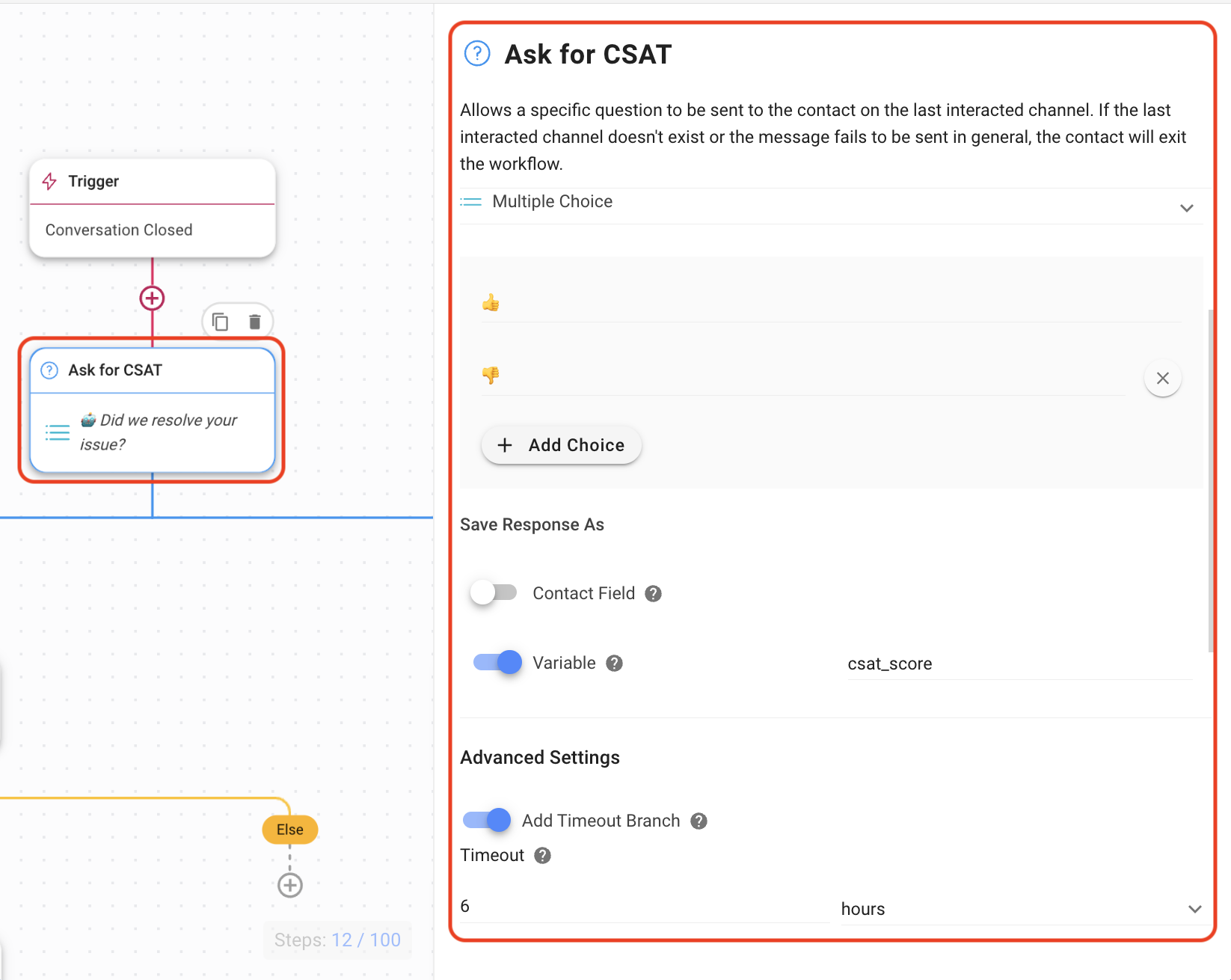
The template is set up with an Ask a Question step triggered after a conversation is closed. You may edit the question and multiple choice replies if desired. The response is automatically saved as a [Variable](/ismessenger/contact-and-messages/untitled.md) named *csat\_score*.
**Note:** If you change the 👍 and 👎 response options here, you’ll also need to change the responses in the branch configuration.
The default timeout branch is 6 hours, but this can also be edited or toggled off.
### **Manage positive response and save data in Google sheet or data warehouse**
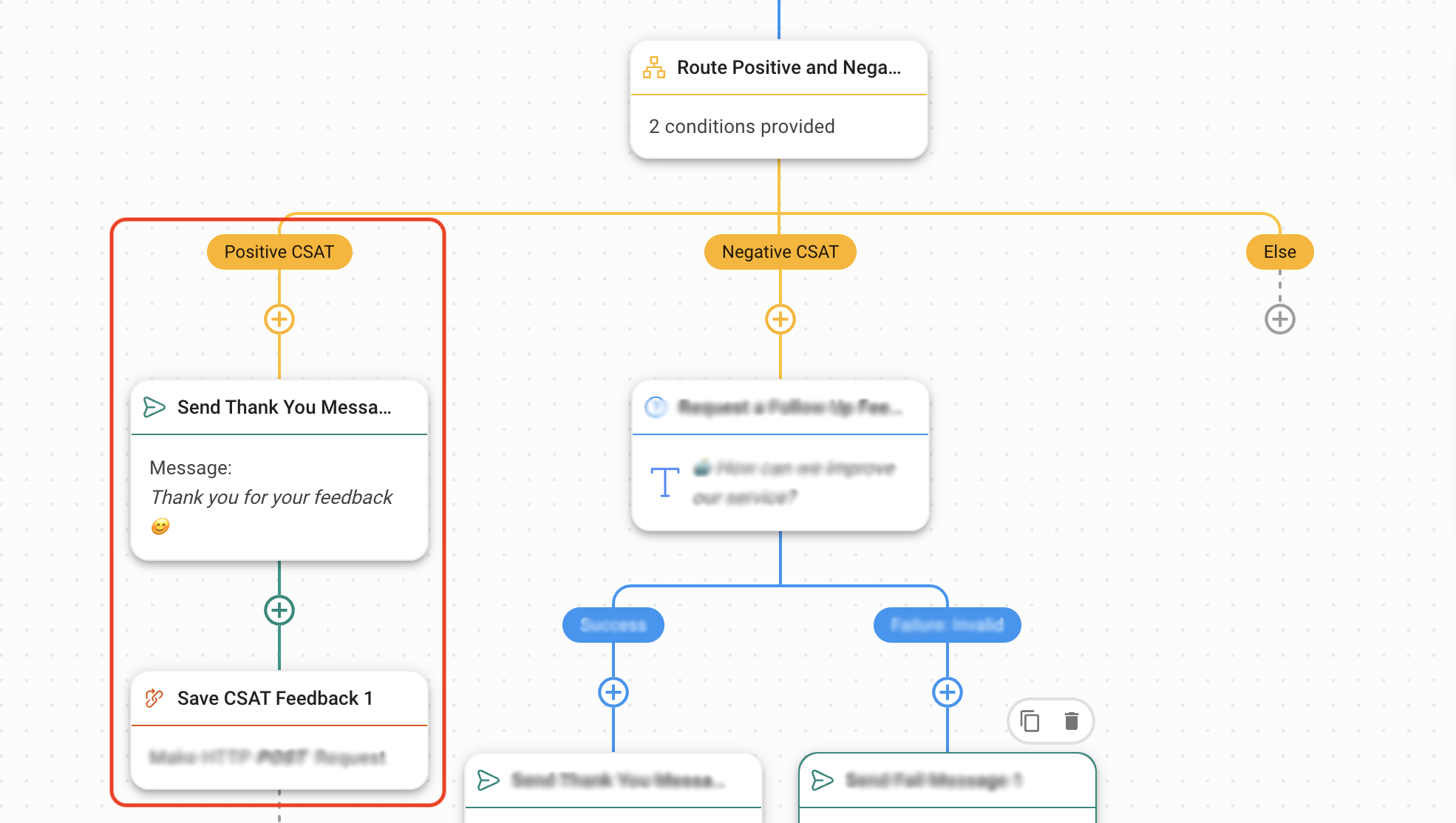
The branch step is set up to handle positive and negative responses differently. First, we’ll look at managing a positive response.
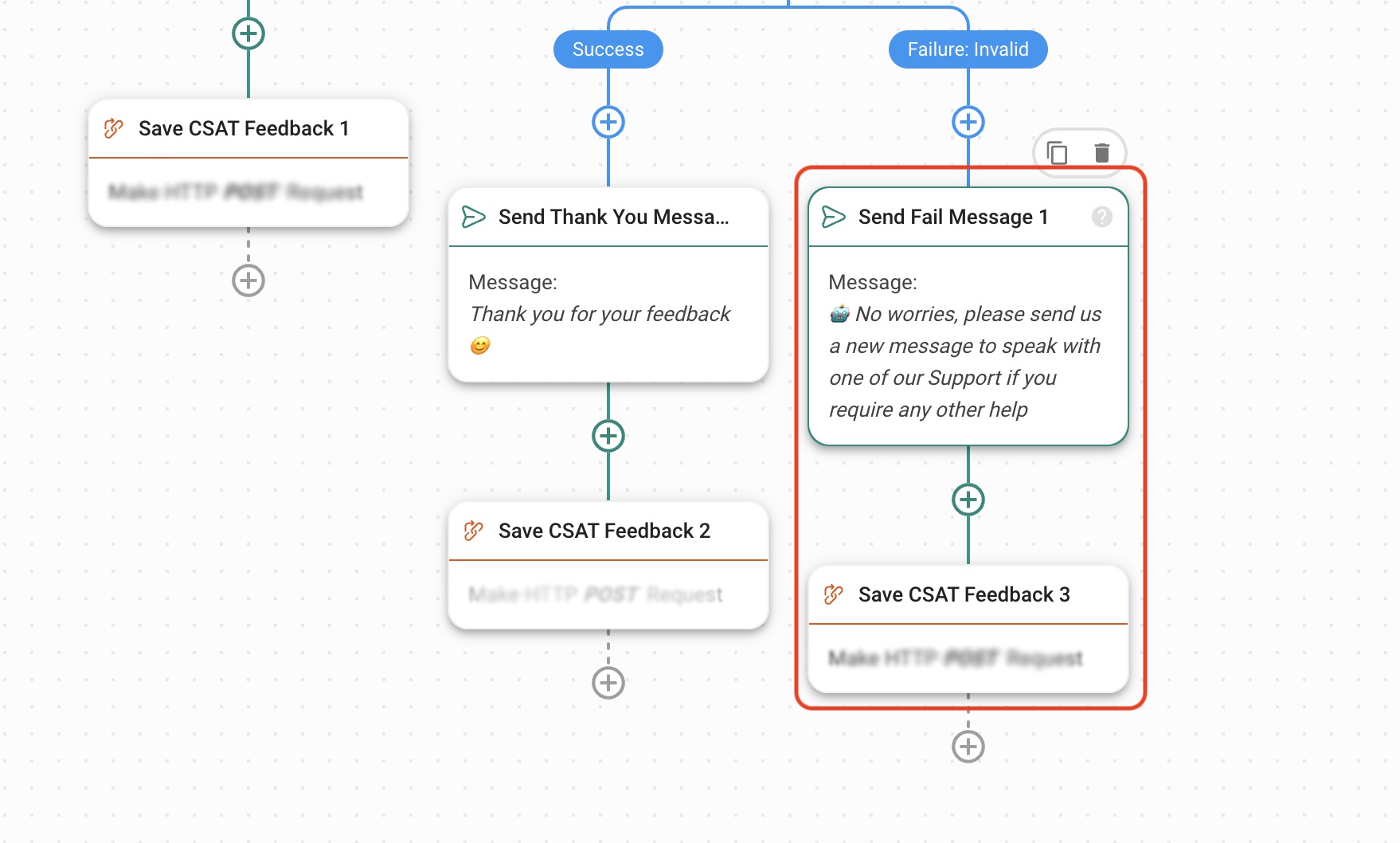
When the customer selects 👍, they will be routed to this branch where they’ll receive a message and their responses will be saved.
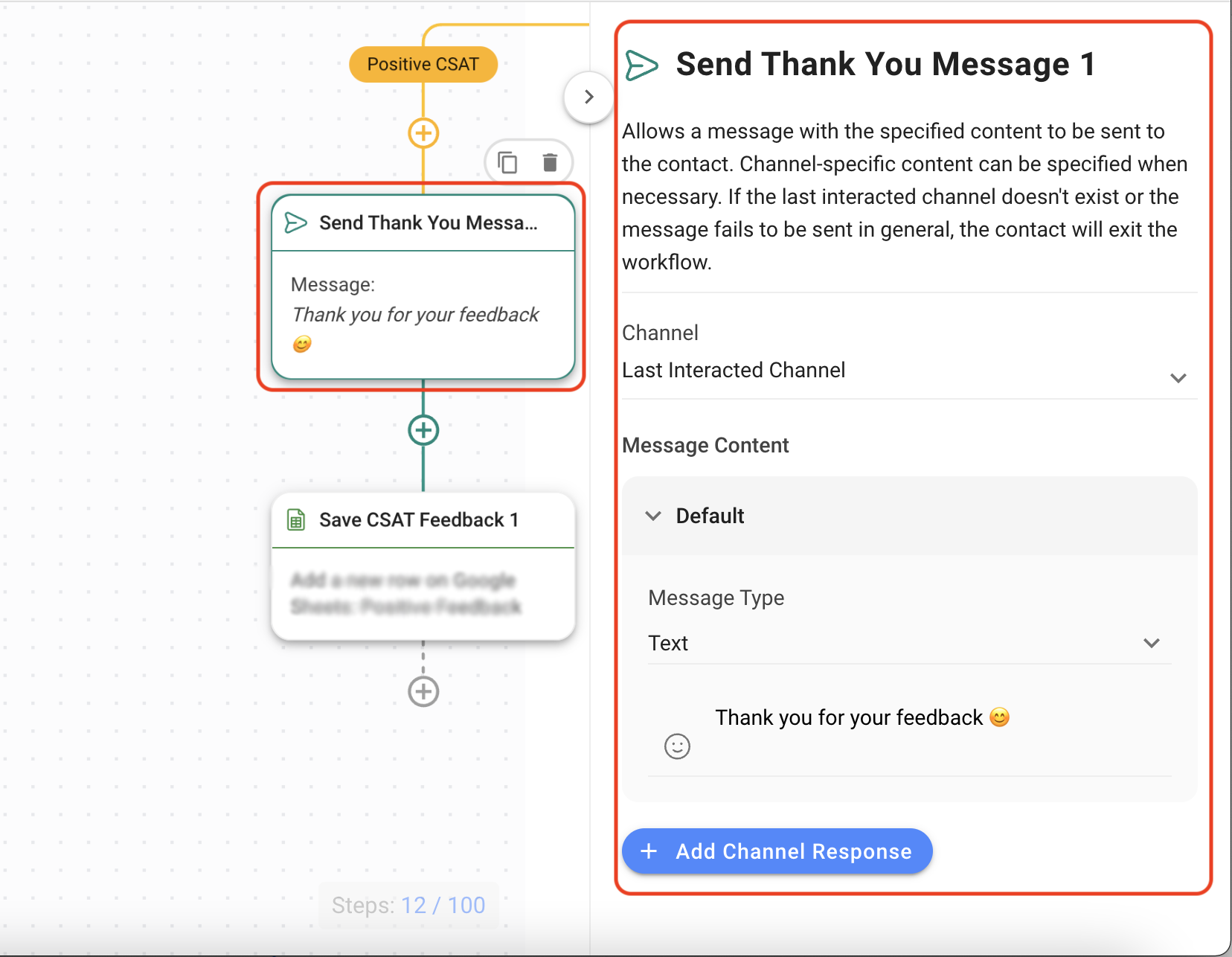
Edit the Send Thank You Message step as desired.
There are two ways to save positive responses.
Saving responses in a Google Sheet
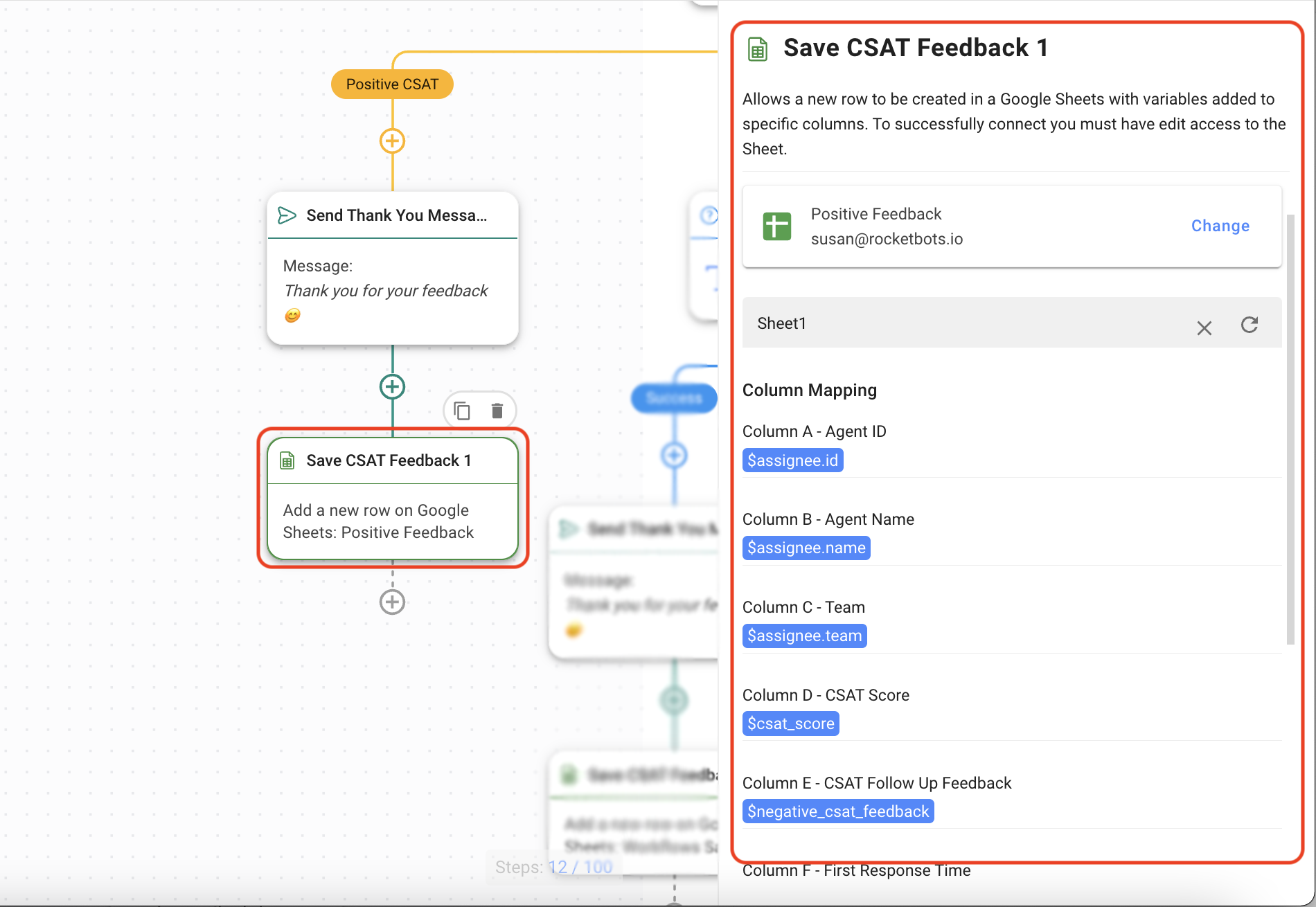
Configure the data to send to a Google Sheet.\
Select the Google Sheet you’ve prepared earlier for saving CSAT data > Add relevant Variables to the Column Mapping fields.\
Learn more about the [Add Google Sheets Row Step here](/ismessenger/modules/workflow.md).\
\
\
\
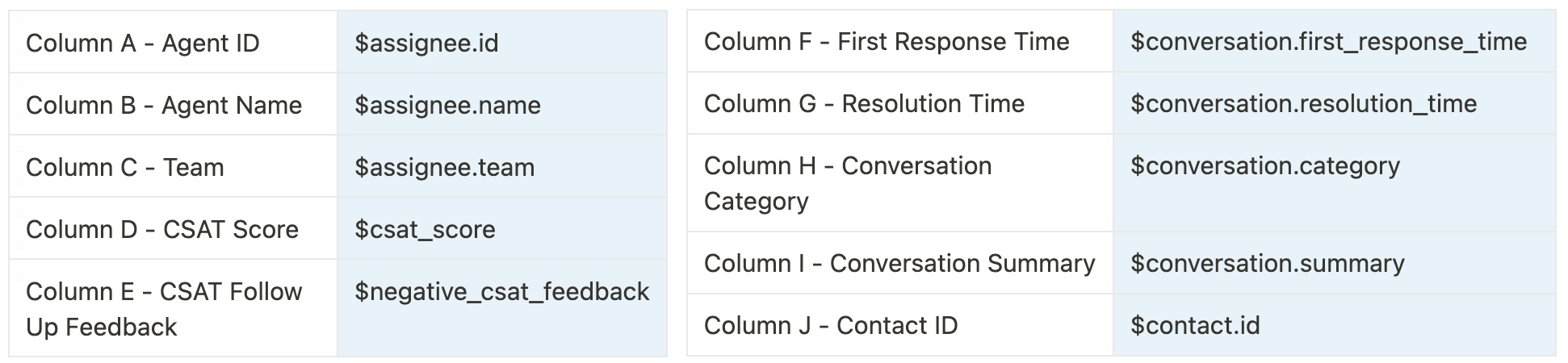
Here’s an example of how we would match Variables to the available columns.\
\
\
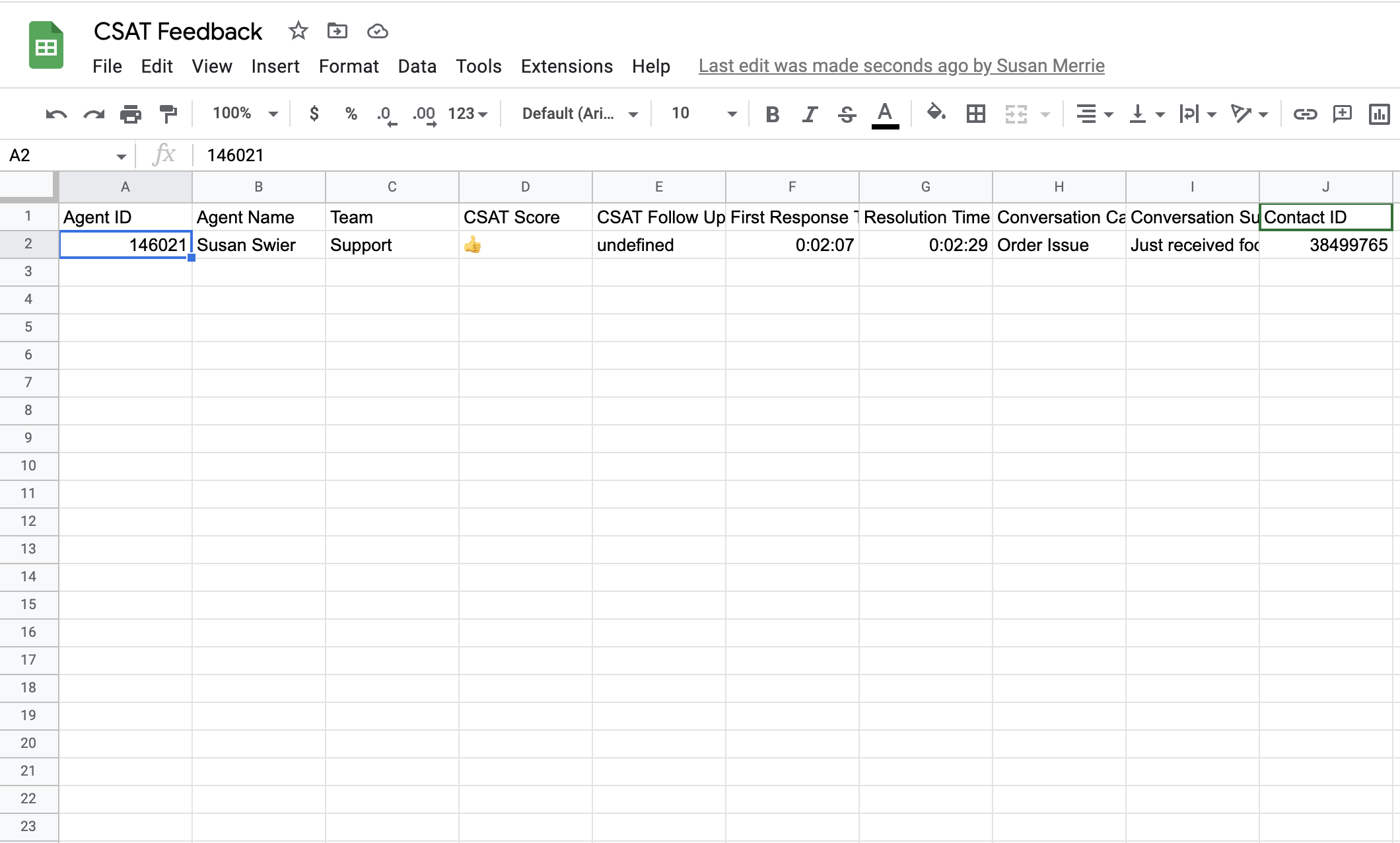
Here’s what the Google Sheet should look like after receiving positive feedback:\
Saving responses in a CRM or data warehouse
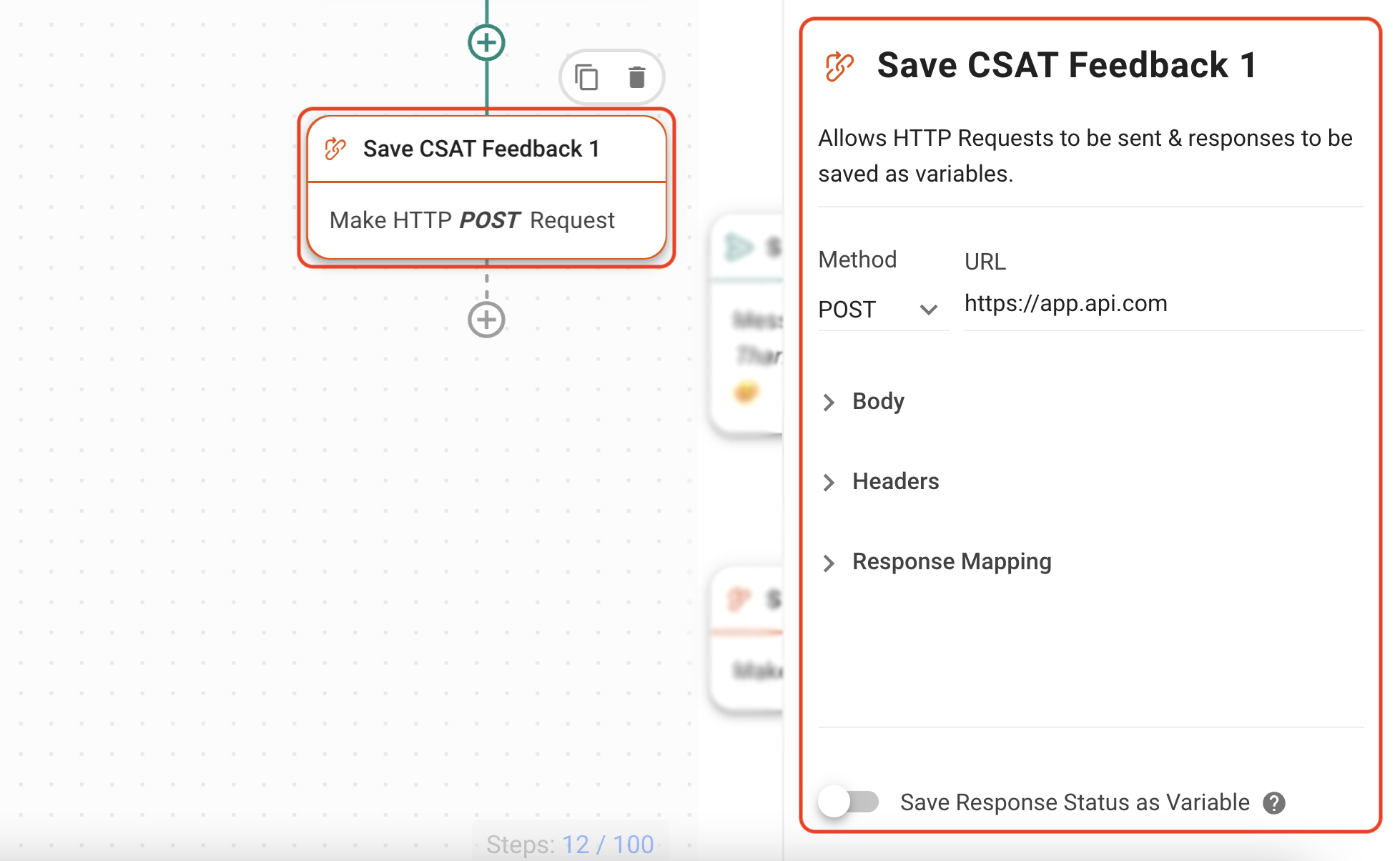
Configure the HTTP request step to send the data to your CRM or a data warehouse.\
Learn how to [configure the HTTP request here](/ismessenger/modules/workflow.md).\
### **Manage negative response and save data in Google sheet or data warehouse**
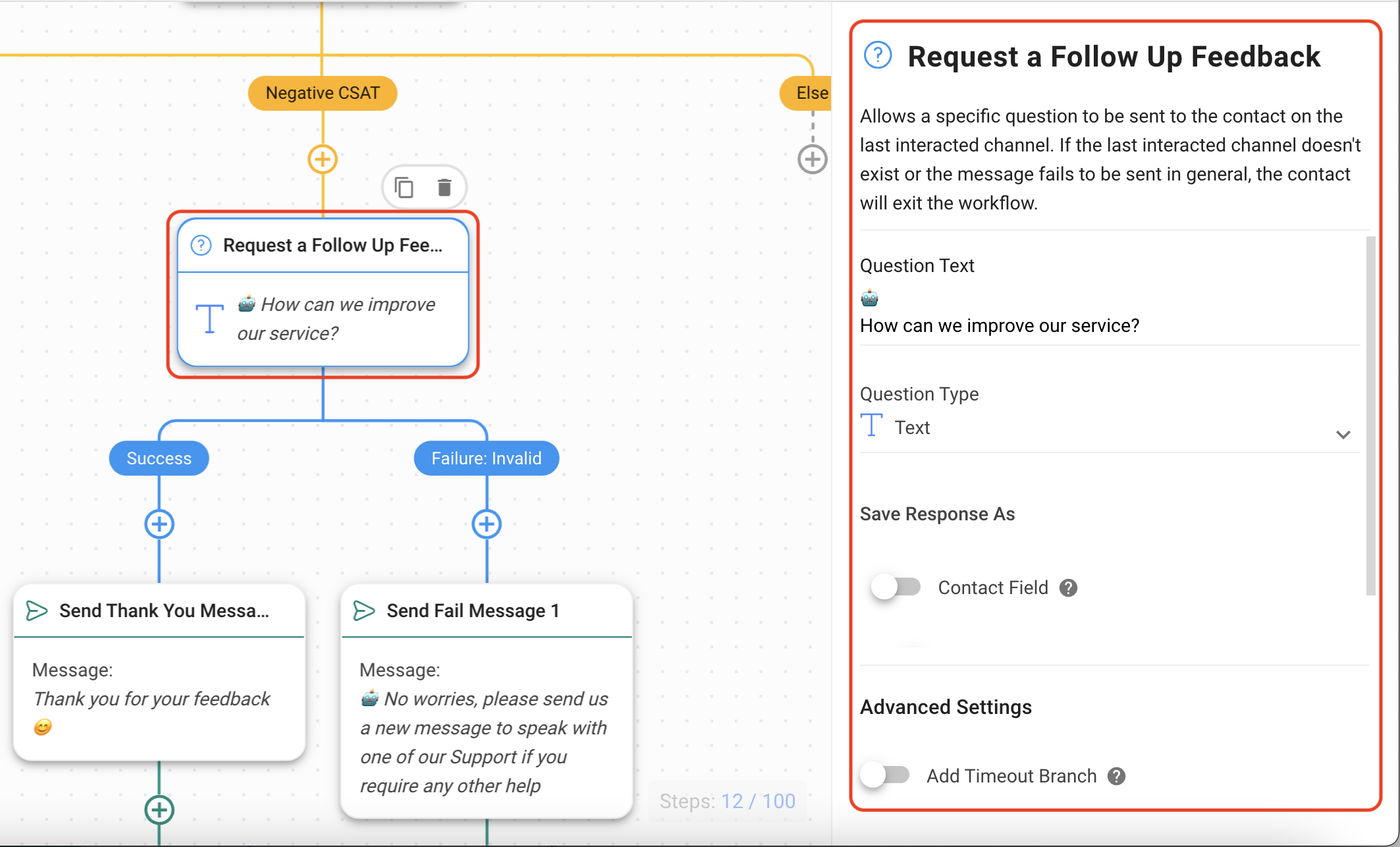
If a negative response is given, the branch step will route to an [Ask a Question step](/ismessenger/modules/workflow.md) to get a follow up feedback. Edit the question as desired.
Edit the Send Thank You Message and Send Fail Message steps if desired.
Then, depending on which template you’ve chosen, the response will be saved accordingly.
Saving responses in a Google Sheet
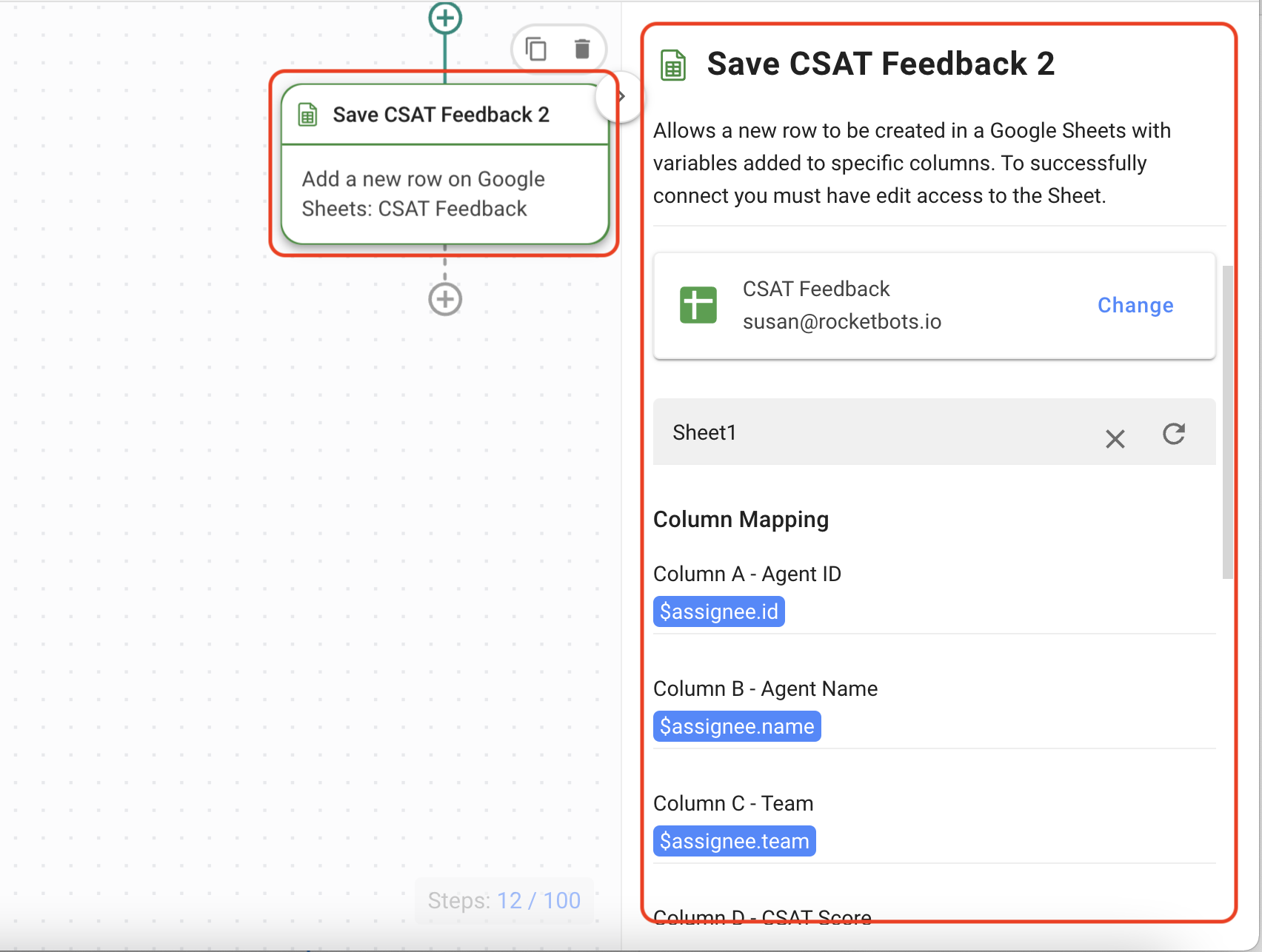
Select the same Google Sheet you’ve created to save CSAT responses and map the fields accordingly.\
Learn more about the [Add Google Sheets Row Step here](/ismessenger/modules/workflow.md).\
\
\
\
\
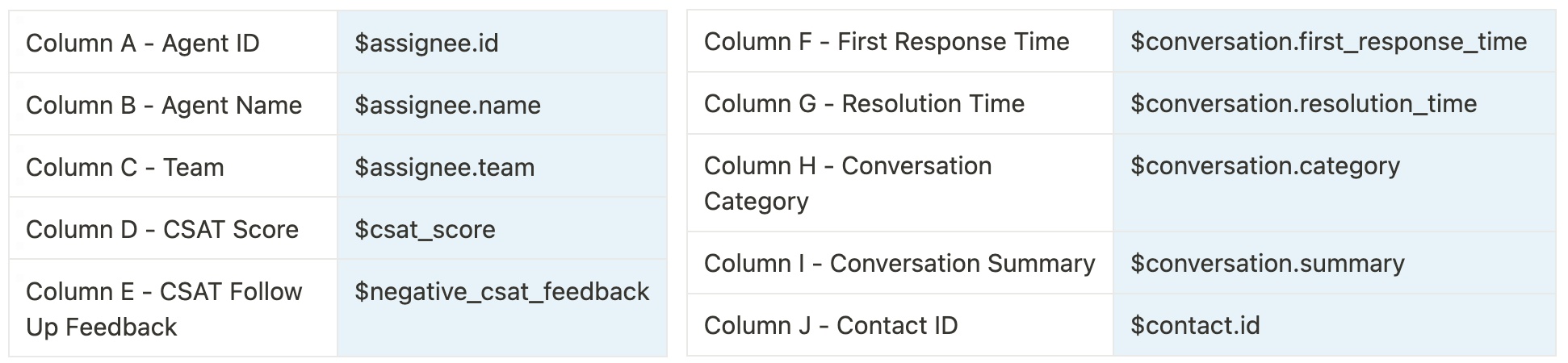
Here’s an example of how we would match Variables to the available columns.\
\
\
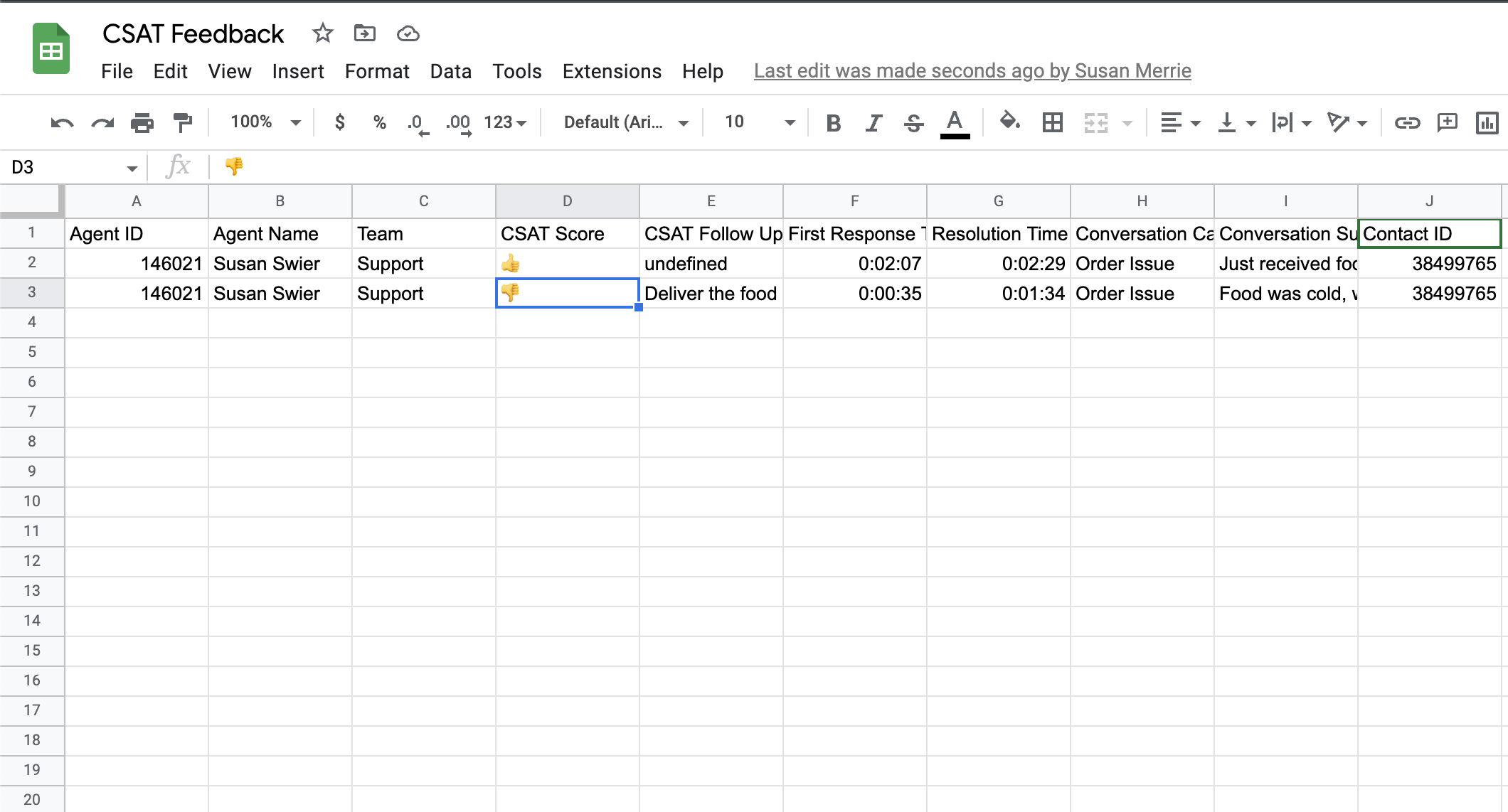
Here’s what the Google Sheet should look like after receiving negative feedback:\
Saving responses in a CRM or data warehouse
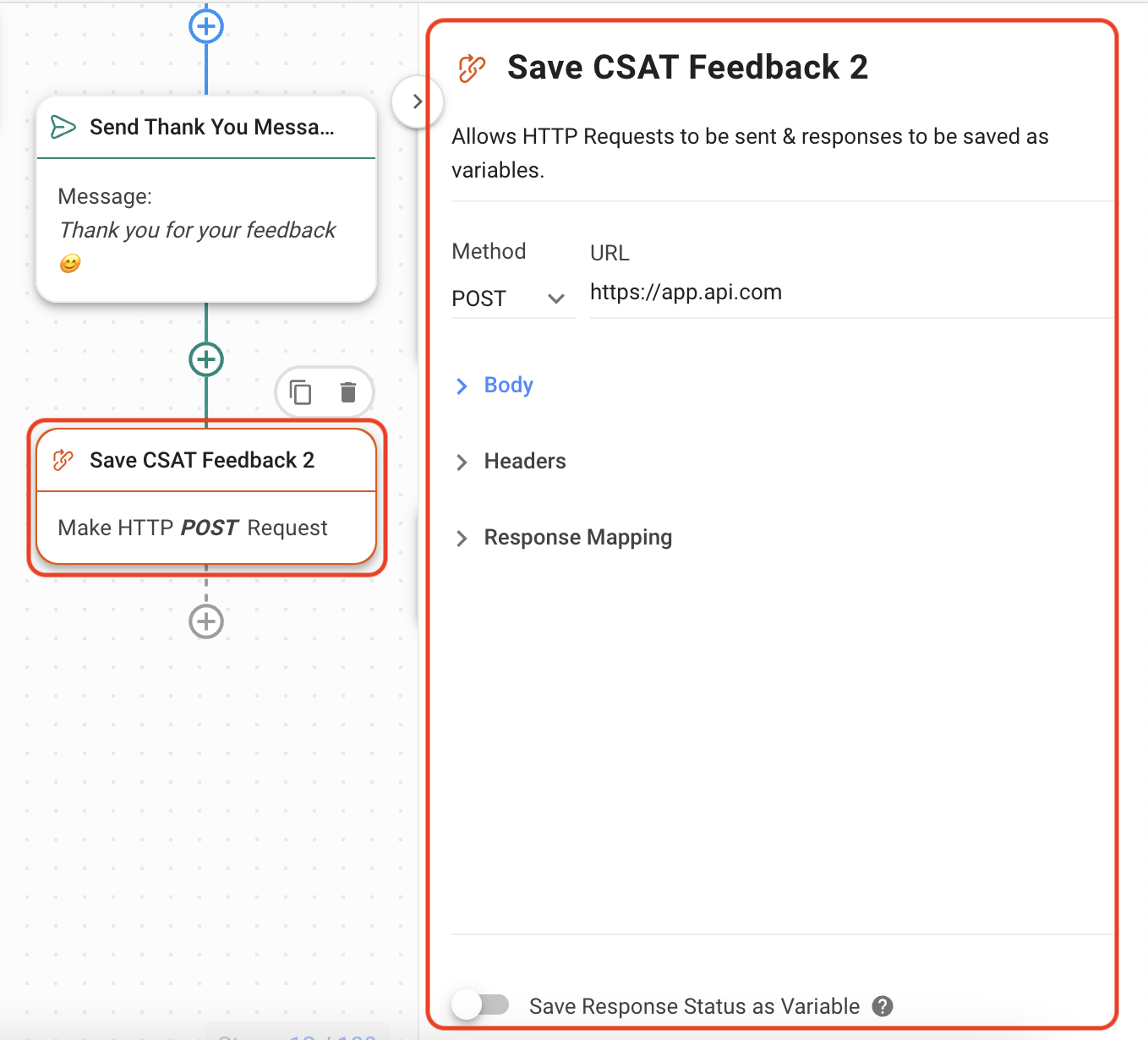
Configure the HTTP request step to send the data to your CRM or data warehouse.\
Learn how to [configure the HTTP request here](/ismessenger/modules/workflow.md).\
If no feedback is given, the Fail Message will be sent, and all the data except *CSAT Follow Up Feedback* will be saved. Configure *Save CSAT Feedback 3 step* exactly as done for the first two CSAT Feedback steps.
### **Manage invalid and no responses**
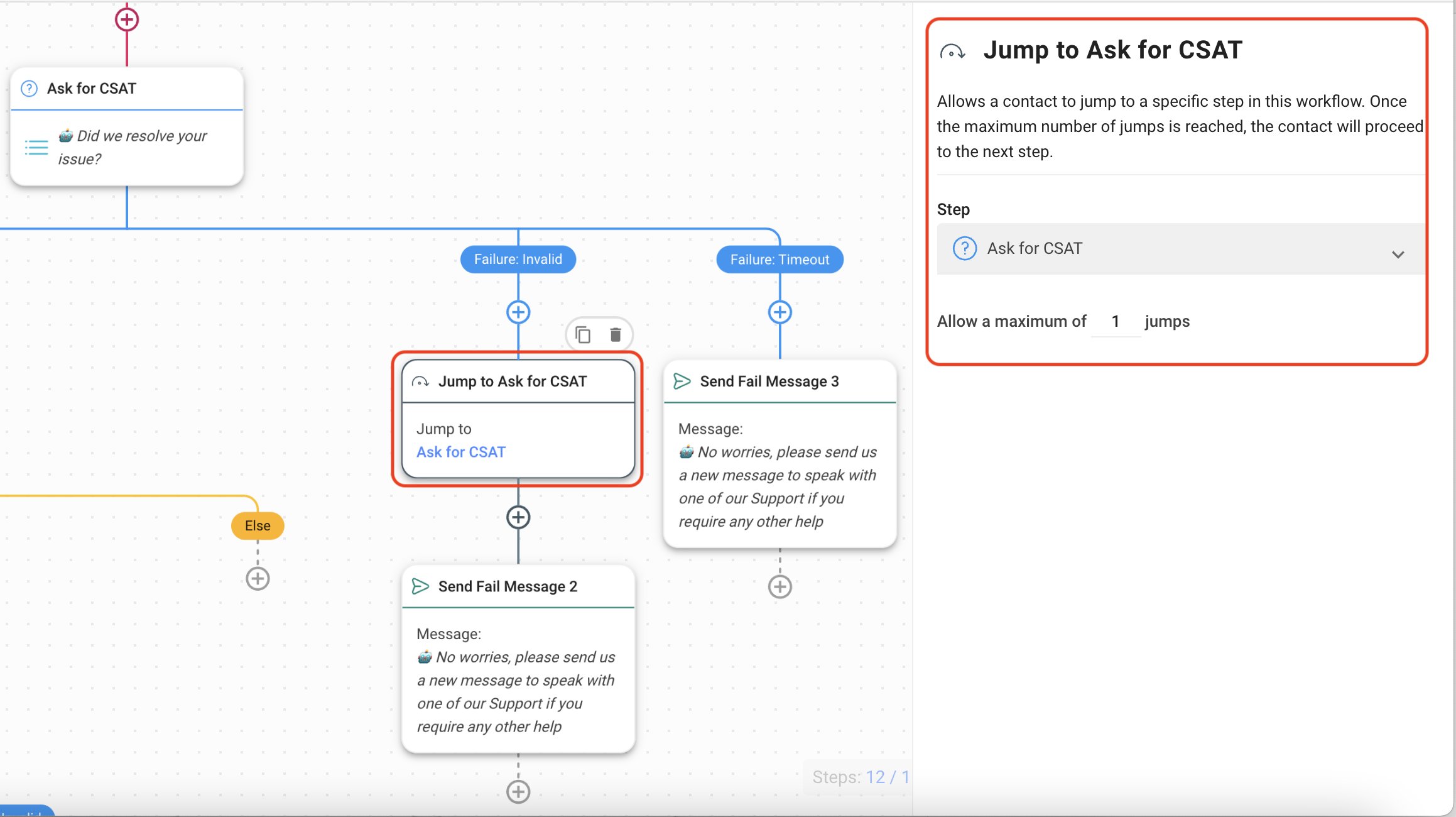
If a customer replies with answers that are not in the provided options, this will be considered invalid and the customer will be routed to the Failure: Invalid branch.
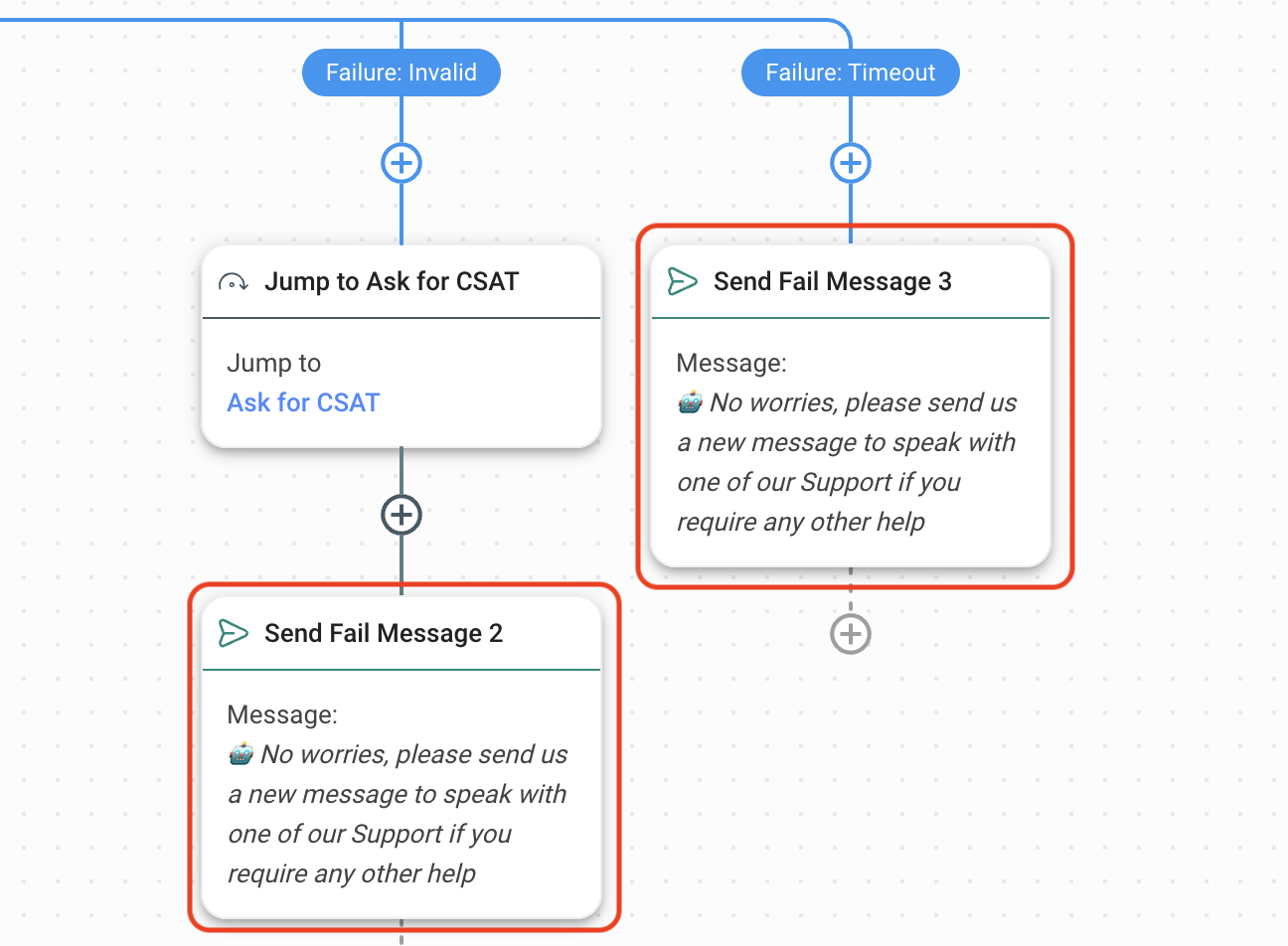
If a customer does not reply within the time frame you’ve configured earlier, the customer will be routed to the Failure: Timeout branch.
The Workflow is set up with a [Jump Step](/ismessenger/modules/workflow.md) if the response is invalid. This will jump back to *Ask for CSAT* step. The default configuration is one jump, but you can edit the number of jumps allowed.
If the customer continues to send invalid responses, or if there is no response, a Fail Message will be sent. Edit the message as desired.
---
# Agent Instructions: Querying This Documentation
If you need additional information that is not directly available in this page, you can query the documentation dynamically by asking a question.
Perform an HTTP GET request on the current page URL with the `ask` query parameter:
```
GET https://docs.is-messenger.com/ismessenger/support-use-cases/how-to-send-csat-to-customer-and-save-data-in-google-sheets-or-crms.md?ask=
```
The question should be specific, self-contained, and written in natural language.
The response will contain a direct answer to the question and relevant excerpts and sources from the documentation.
Use this mechanism when the answer is not explicitly present in the current page, you need clarification or additional context, or you want to retrieve related documentation sections.